Global Labour Resilience Index 2025: The Transformative Impact of AI.

How AI is reshaping economies and labour markets, the 9th edition, in collaboration with Google.

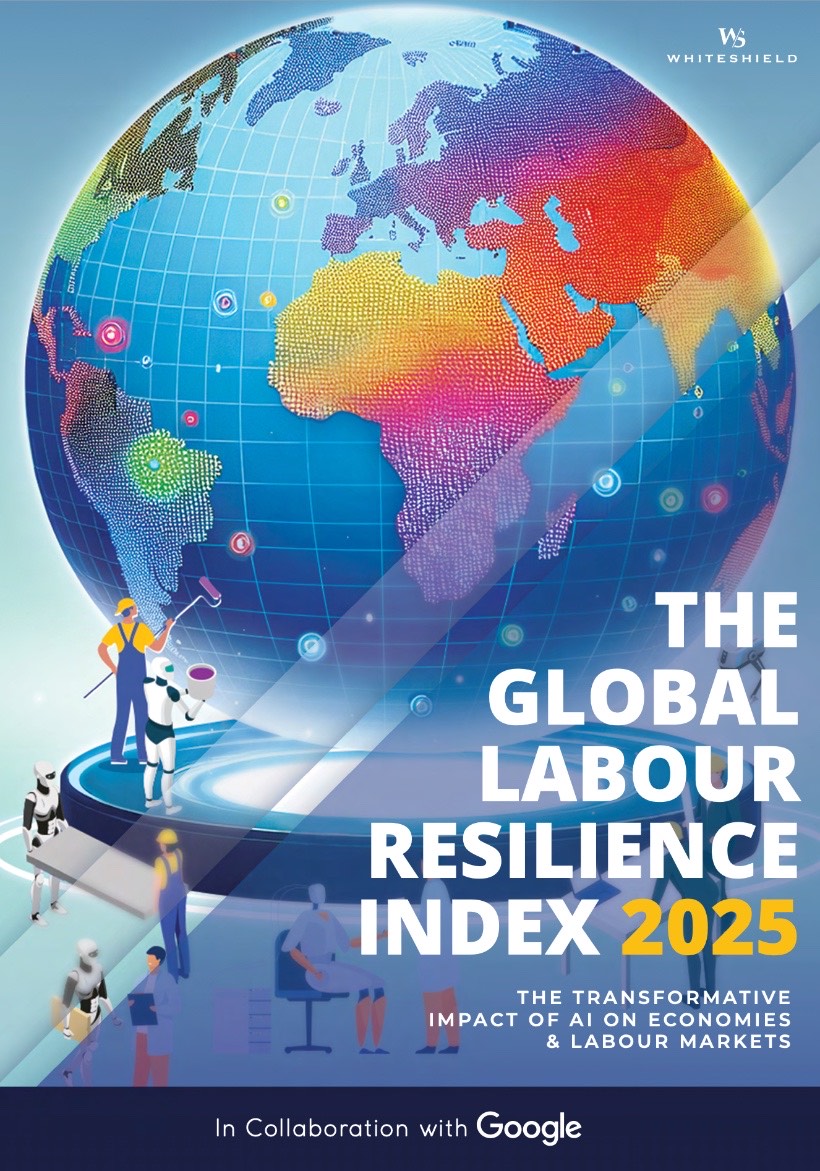
The Global Labour Resilience Index 2025: The Transformative Impact of AI on Economies & Labour Markets, report cover
Index · 2025Davos · Jan 2025Whiteshield · Google · CEMS

AI is reshaping global labour markets.

Whiteshield unveiled the 9th edition of the Global Labour Resilience Index 2025 in collaboration with Google during an exclusive private event in Davos. Published in partnership with CEMS, the report draws on data from over 70 indicators to assess how 118 countries adapt their labour markets to external shocks, including the rapid rise of AI. While nations like the United States and Singapore are primed to thrive, the report warns that many countries risk being left behind.

The event: "The Transformative Impact of AI on Economies and Labour Markets", was chaired by Nobel Laureate Sir Christopher Pissarides, Special Advisor and Director at Whiteshield. It featured prominent speakers including Anna Koivuniemi, Head of Google DeepMind Impact Accelerator, and convened over 50 senior policymakers, CEOs, academics, and international organisations.

Read the GLRI 2025 Report  →

Key Insights from the GLRI 2025

The report emphasises how AI is transforming labour markets, showing that the strongest economies combine traditional policies with strategic investments in AI and advanced data strategies. The United States and Singapore lead the 2025 rankings on the strength of their entrepreneurial spirit, adaptable labour markets, and focus on AI innovation. Sweden closely follows, backed by its investments in education and research.

Countries in South Asia, the Middle East, and North Africa (MENA) are also progressing, with India, the UAE, and Saudi Arabia gaining from AI-related initiatives. However, the gap between top-performing and struggling nations continues to grow, leaving regions like Sub-Saharan Africa particularly vulnerable.

The Dual Impact of AI: Opportunities and Challenges

AI is creating opportunities to improve how we work, making jobs more accessible, efficient, and higher-quality, and opening up new careers, from designing how people interact with AI systems, to building ethical guidelines for AI use, to organising AI data. It also brings challenges: some jobs are displaced, pay gaps can widen, and job security can feel less certain. The report stresses the importance of thoughtful planning and policy so that everyone benefits from these advancements.

GLRI Highlights

  • United States, leads in AI investment and innovation, with 60% of global AI investment over the past decade and a quarter of the world's AI startups.
  • Singapore, combines strong governance with strategic AI investments, excelling in governance, digital skills, and entrepreneurship.
  • Sweden, demonstrates resilience through substantial investment in education and research.
  • Sub-Saharan Africa, despite structural challenges, the region's young, growing population presents the potential for an AI-driven leap in resilience.
  • MENA, shows progress in AI adoption, with GCC nations outperforming others in the region.

A Call to Action

Advances in technology, especially AI, have unlocked the potential to personalise services, a space where the private sector leads while the public sector lags behind. By leveraging AI and data, governments can shift from one-size-fits-all approaches to citizen-centric policymaking, tailoring interventions to specific population segments. Tools like centralised data hubs, advanced analytics for archetype design, and modern digital delivery platforms empower policymakers to create smart, personalised policies. Initiatives such as Whiteshield and Google's Job Accelerator exemplify how governments can embrace this new era of tailored, inclusive policymaking.

The report urges governments and leaders to adopt AI-driven strategies tailored to the needs of their people, and to invest in the digital tools and education that build stronger, more adaptable job markets. Without action, gaps between communities may grow, vulnerable groups could lose out, and opportunities for progress might be missed. Now is the moment to use AI's power to create job markets that are fair, inclusive, and full of opportunity for everyone.

In the press

The GLRI 2025 launch, in collaboration with Google, landed in over 200 press stories on the day of the event. Selected coverage across the MENA region, South Africa, Nigeria and Kenya:

MENA and GCC

  • Forbes Middle East: America and Singapore top the Global Labour Resilience Index for 2025
  • Yahoo! Finance: AI Reshaping Global Labor Markets: US, Singapore Leading the Way, But Many Risk Falling Behind
  • Al Khaleej: Davos: Artificial intelligence is re-adapting global labor markets
  • Al Bayan: Artificial Intelligence is reshaping global labor markets: the US and Singapore are leading the way, and many countries risk being left behind
  • Nabd: Davos: Artificial intelligence is re-adapting global labor markets
  • The Times Kuwait: AI's impact on labor markets, US and Singapore lead, many at risk says Davos Report
  • Computer News Middle East: AI reshaping global labour markets: US, Singapore leading the way, but many risk falling behind
  • PR Newswire: AI Reshaping Global Labor Markets: US, Singapore Leading the Way, But Many Risk Falling Behind
  • Business Chief: AI Reshaping Global Labor Markets: US, Singapore Leading the Way, But Many Risk Falling Behind
  • Middle East & North Africa Financial Network: AI Reshaping Global Labor Markets: US, Singapore Leading the Way, But Many Risk Falling Behind
  • AI Magazine: AI Reshaping Global Labor Markets: US, Singapore Leading the Way, But Many Risk Falling Behind
  • Fintech Gate: Artificial Intelligence is Reshaping Global Labor Markets, According to a New Report Released in Davos
  • TECHx Media: AI, Inequality, and Labour Resilience: Key Findings from Whiteshield's GLRI
  • MENA FN: Artificial Intelligence is reshaping global labor markets: the US and Singapore are leading the way, and many countries risk being left behind
  • AI Arabic: Davos Economic Forum confirms artificial intelligence is re-adapting global labor markets
  • AI Unplugged: AI Reshaping Global Labor Markets: US, Singapore Leading the Way, But Many Risk Falling Behind
  • Middle East News 247: AI Reshaping Global Labor Markets: US, Singapore Leading the Way

South Africa

  • The Citizen: AI reshaping global labour markets: US, Singapore leading the way
  • IT Online: AI is reshaping global labour markets, and many could fall behind
  • Maglazana: Whiteshield and Google Cloud Unveil 2025 Global Labour Resilience Index
  • Tech Nation: US dominates AI investment, Singapore a close second, sub-Saharan Africa ranked at bottom, report

Nigeria

  • Business Post: Report Advocates AI-driven Policies to Shape Future of Labour Markets
  • Tech Economy: Davos: AI Reshaping Global Labour Markets
  • Technext Africa: AI reshaping global labour markets as US, Singapore lead the way, new report at Davos says
  • Brand Icon Image: AI Reshaping Global Labour Markets: US, Singapore Leading the Way, Many Risk Falling Behind
  • Techbuild Africa: Shifting Labour Markets: AI Advances in the US and Singapore, Challenges Ahead for Others, GLRI Report

Kenya

  • Inooro FM: AI Reshaping Global Labor Markets: US, Singapore Leading the Way
  • Hot 96: World Economic Forum unveils blueprint for equitable AI
  • The Star: Kenyan youth have potential in driving AI, report
  • Bizna Kenya: The 9th Global Labour Resilience Index (GLRI): Insights on AI's impact on labour markets
  • Techish: Global Labor Resilience Index 2025: US and Singapore Dominate AI Innovation
  • Afcacia: Sub-Saharan Africa lags behind in global AI revolution

Notable coverage

The most resilient labour markets combine traditional labour policies with strategic investments in AI and personalised, data-driven strategies. While a number of countries are thriving, some in sub-Saharan Africa are at risk of being left behind. This is the headline finding from Whiteshield's 9th edition of the Global Labour Resilience Index (GLRI), launched in collaboration with Google Cloud on the sidelines of the World Economic Forum (WEF) Annual Meeting in Davos.

IT Online

Kenya has been ranked as number three among Sub-Saharan Countries that have potential in use of Artificial Intelligence due to its young population. Kenya was ranked number 83 globally after Mauritius (56) and South Africa (71), Global Labour Resilience Index report 2025 read.

The Star

More from Insights.

Back to all insights